
Pinstripes After Power
When Ninii posted video from an offline store event wearing SHAO's CLASS OF '98 Collection—the Brown Pinstripe Blazer with Blue Pinstripe Dress—she mapped the intersection of China's most sophisticated social commerce platform and 1990s Wall Street tailoring codes. RedNote (小红书/Xiaohongshu) functions as lifestyle authority marketplace, and when a KOL like ninii features specific pieces there, she co-signs entire cultural positions.
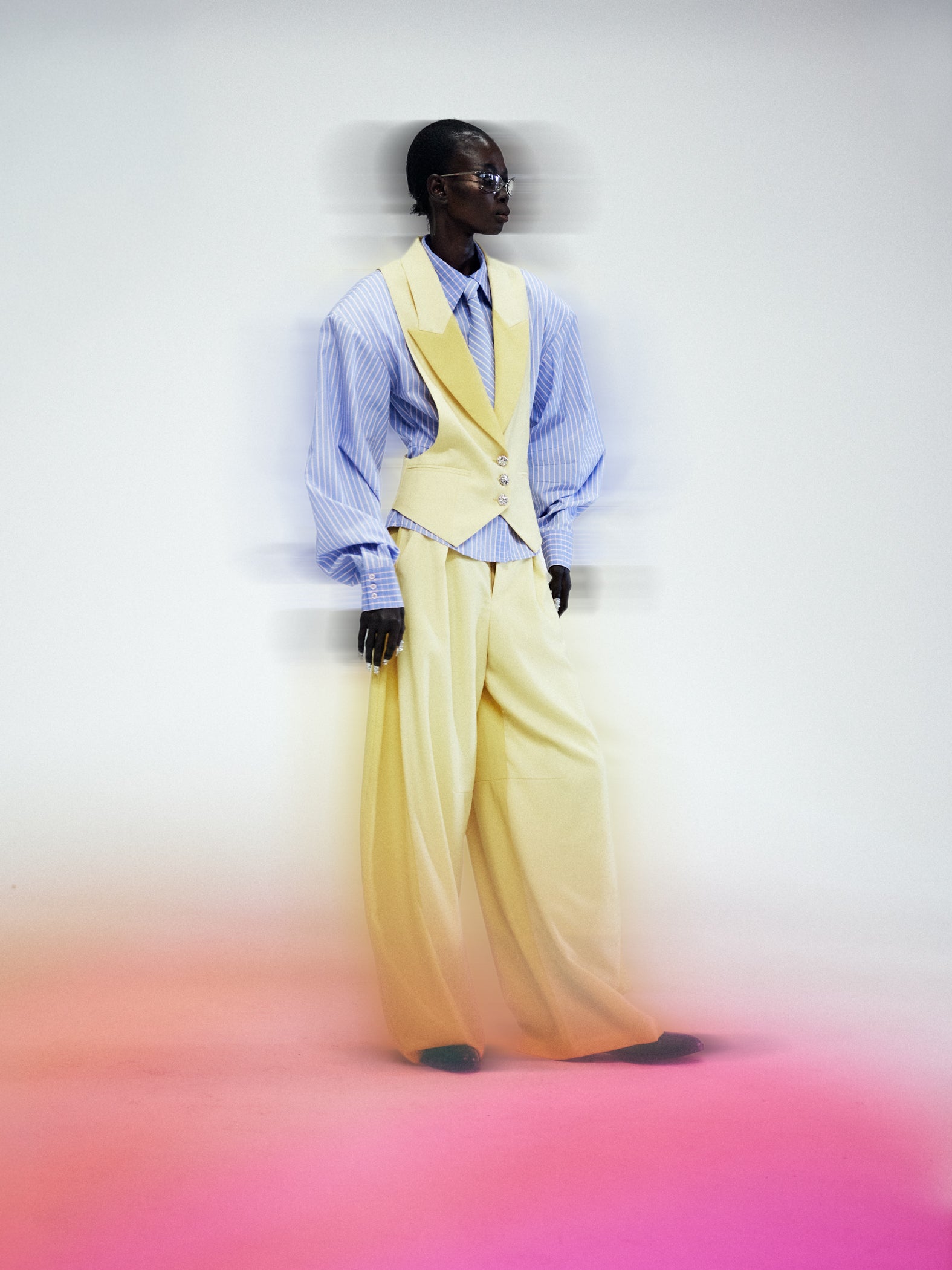
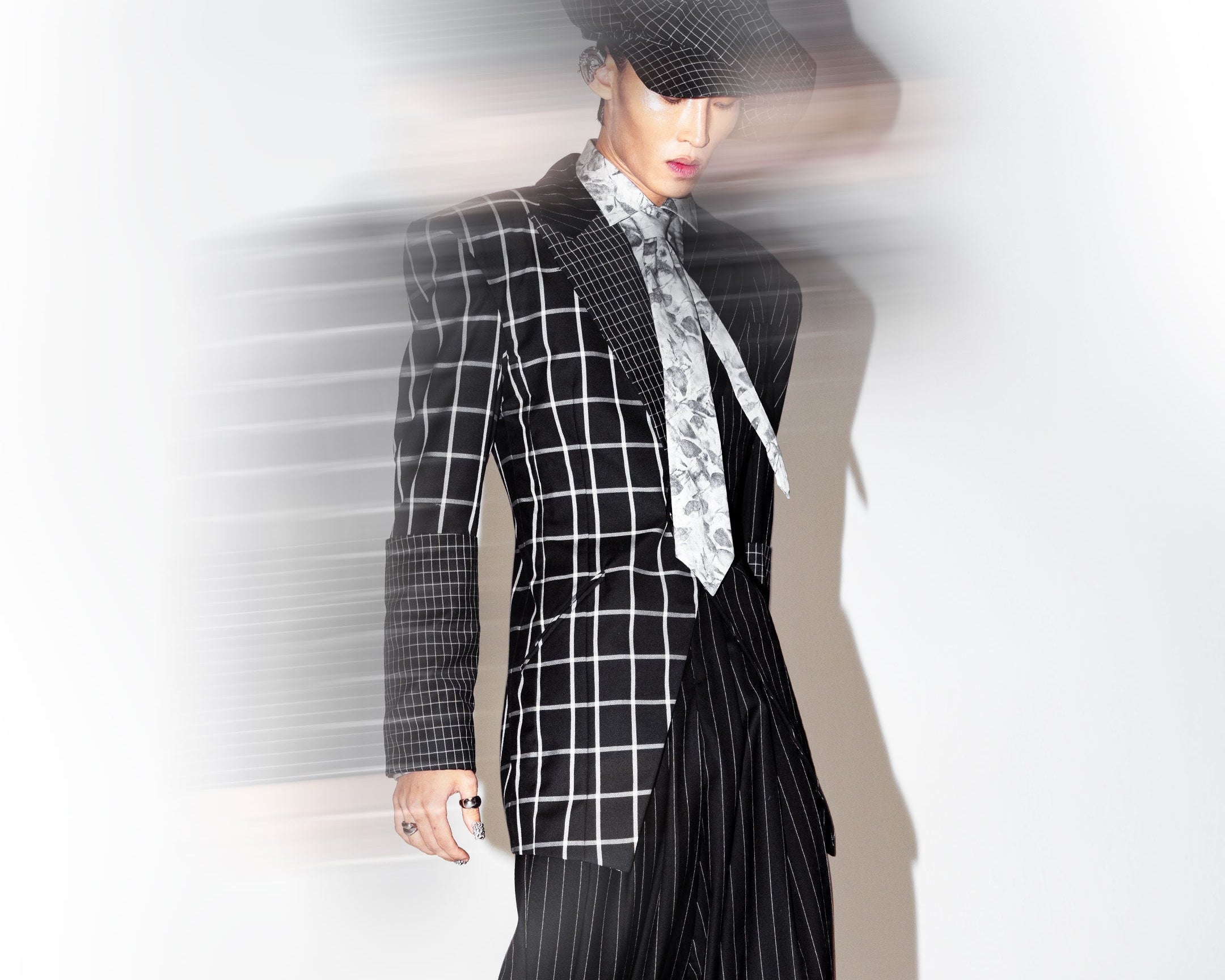
The blazer-dress combination is a visual thesis on how power dressing evolved after democratization. Traditional pinstripes—once signaling "boardroom belonging"—now function as historical reference points. SHAO's CLASS OF '98 doesn't reproduce these codes faithfully; it samples them like hip-hop producers sampled '80s jazz. You recognize the source, but the context shift creates new meaning.

The RedNote Effect
RedNote occupies cultural space without direct Western equivalent. It's not Instagram, not TikTok, not Pinterest. It's a hybrid where lifestyle content, product recommendations, and social validation merge into one ecosystem. When fashion content performs well, it's because the platform's predominantly young, female, urban, affluent user base has granted it cultural authority. They're researching purchases, verifying quality claims, building brand knowledge through community validation—not just liking posts.
Ninii's choice to feature SHAO on RedNote signals understanding of where fashion conversations carry actual commercial and cultural weight. The offline store event becomes proof-of-concept documentation. "This exists in physical retail" carries different authority than "this exists in brand imagery." RedNote users value that distinction—the platform's social contract depends on real-world verification of aspirational content.
Video format adds another layer: movement, drape, how the blazer sits, how the dress moves. Static imagery can lie about fit and construction; video exposes this immediately. By choosing video, ninii says "examine this closely" rather than asking viewers to accept styled photography at face value. That transparency aligns with RedNote's community standards, where over-produced content often underperforms authentic documentation.

Offline Events in Digital Documentation
The offline store event context matters more than it seems. In an era where fashion exists as digital content first, physical garment second, offline events function as reality anchors—proof that brands operate in three-dimensional space with actual retail presence and inventory. When ninii documents SHAO pieces at a physical store, she's validating the brand's material existence beyond imagery and aspiration. RedNote users particularly value this verification because the platform has trained them to distinguish between "exists only in photoshoot" versus "you can actually buy this." The offline event becomes a legitimacy marker, especially for brands like SHAO operating between established luxury houses and pure digital-native brands.
Ninii's presence adds another validation layer—KOLs with legitimate followings don't appear at retail events without substance behind the partnership. Her willingness to create content suggests confidence her audience will respond positively, requiring belief that product quality and brand positioning will support that response. It's circular validation where everyone's reputation depends on everyone else's authenticity—a surprisingly effective quality control mechanism. Physical retail signals commitment to actual production and distribution infrastructure, and when documented by influential voices on RedNote, it completes the loop between aspiration and accessibility.

New York Design Sensibility Meets Beijing Street Authority
SHAO's NYC positioning carries specific cultural weight. New York fashion means pragmatic sophistication—clothing for actual urban life rather than runway fantasy or heritage preservation. NYC's fashion identity balances wearability with intelligence, accessibility with quality, distinctly different from Paris's luxury heritage, Milan's craftsmanship, or London's subcultural disruption. This is exactly what SHAO's CLASS OF '98 Collection attempts.
When this NYC sensibility arrives in Beijing via KOL documentation rather than traditional brand expansion, it creates different cultural exchange. Ninii isn't positioning SHAO as "American brand now in China"—she's featuring pieces that work within her existing wardrobe, demonstrating how NYC-designed tailoring functions in Beijing without cultural translation. The Brown Pinstripe Blazer and Blue Pinstripe Dress speak fashion language legible across urban centers. This reflects broader shifts where consumers in Beijing, Shanghai, Seoul, and Tokyo engage international brands as peer options within global marketplace, not aspirational Western imports. Geographic origin becomes interesting detail rather than primary selling point, allowing SHAO to compete on design merit and construction quality rather than heritage narratives.

EXPORE: CLASS OF '98 Collection
Platform-Specific Content Strategy
Ninii’s choice of video over static imagery isn’t just algorithm-aware—it’s platform-intelligent. RedNote favors content that sustains attention, but video also serves a deeper function for fashion: it exposes how garments behave in real time. Movement reveals what photography can conceal—how a blazer holds across the back, whether lapels stay flat, how a dress maintains structure after hours of wear.
Documented during an offline event, the footage carries added credibility. This isn’t a controlled shoot with constant adjustments; it’s extended, real-world wear under unpredictable conditions. For RedNote users, that lived-in evidence matters. It answers the unspoken question behind every post: not just does it look good, but does it actually work?

PUBLICATION: @腻腻ninii's RedNote
Where Cultural Authority Lives Now
When Ninii wears SHAO’s CLASS OF ’98 Collection on RedNote, she’s operating within a new system of fashion authority—one shaped by community validation rather than institutional gatekeeping. Designers and fashion media still matter, but they now share influence with platforms where credibility is earned through transparency, peer scrutiny, and cultural fluency. Ninii act as translators, carrying brand narratives into these ecosystems without losing audience trust.
SHAO thrives in this in-between space. Its tailoring draws from Western tradition while remaining culturally legible beyond it; its construction signals seriousness without relying on legacy prestige. The CLASS OF ’98 Collection moves fluidly between offline retail and digital documentation, between generational references and contemporary relevance. Featured on RedNote, it shows how fashion today builds authority not by exclusivity, but by resonance—across platforms, cultures, and communities.


Experience SHAO Bespoke. Designer-led custom tailoring by private appointment in SoHo, NYC. Book a private fitting →